
Software for Tour Operators and DMCs That Want to Scale Without Chaos
 Written byMOGU Team
Growth in the travel industry is not simply about increasing sales. For tour operators and DMCs, growing means managing more itineraries, coordinating more suppliers, controlling more payments, and maintaining a consistent customer experience. This increase in volume creates a familiar problem: operational chaos. When there is no structured system in place, every new sale adds complexity, and every manual process multiplies the risk of errors.
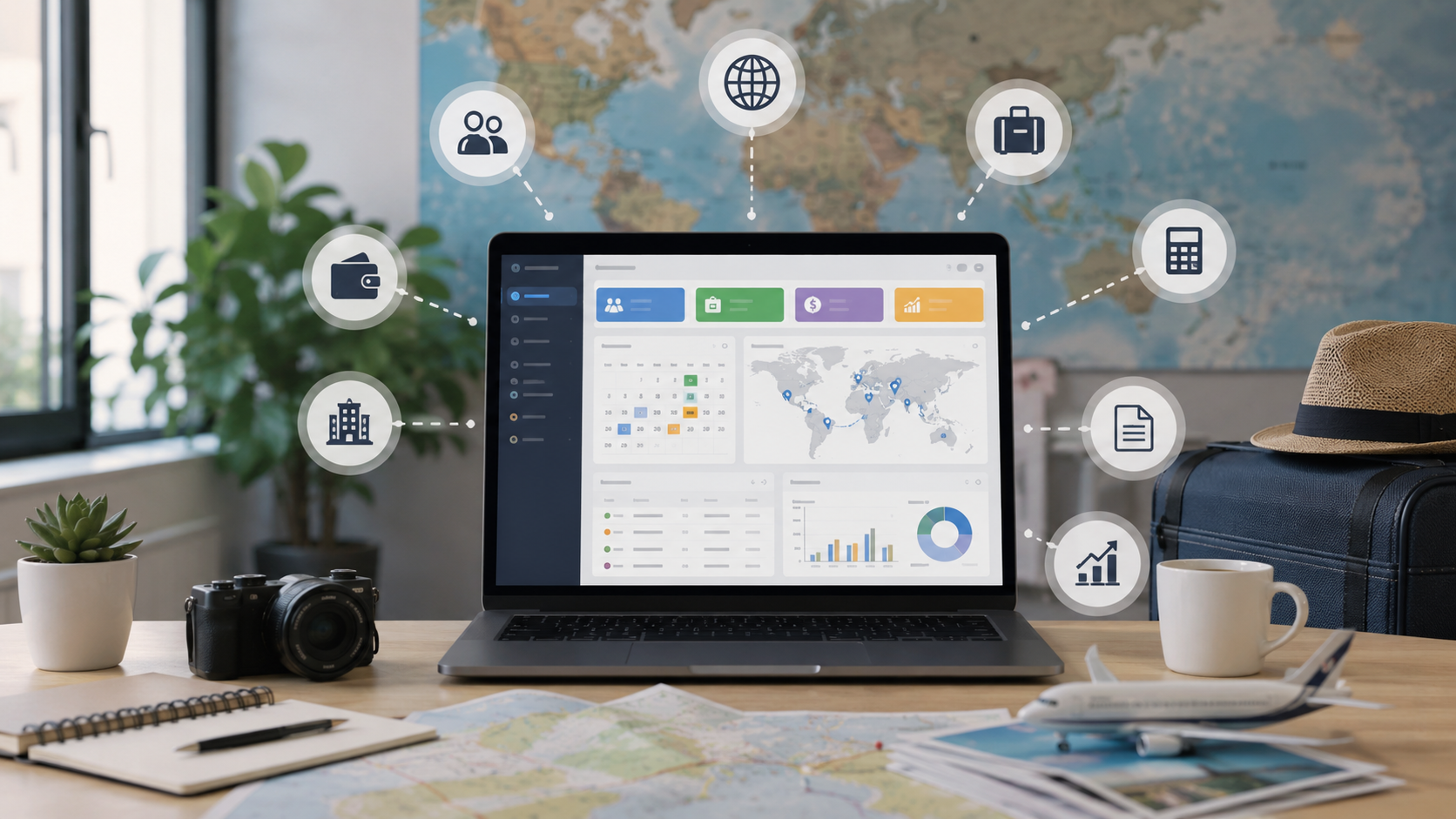
That is why implementing software for tour operators and DMCs is not an incremental improvement, but a structural shift. It transforms fragmented operations into a coherent system where every process is connected and every data point is accessible. This article explains clearly how that transformation works, which problems it solves, and how platforms like MOGU help agencies scale without friction.
What Tour Operators and DMCs Mean in Today’s Operations
Differences Between a Tour Operator and a DMC
A tour operator designs, structures, and sells complete travel packages. Its focus is product creation. A DMC (Destination Management Company), on the other hand, specializes in on-the-ground execution, coordinating local suppliers such as hotels, transportation, and activities. Although their roles are different, both share one critical need: managing multiple interdependent components efficiently.
How Their Daily Operations Work
Travel operations can be understood as a structured workflow that connects several stages:
- Capturing the client request
- Designing the itinerary
- Selecting and negotiating with suppliers
- Creating the sales proposal
- Confirming bookings
- Managing collections and payments
- Operating the trip
- Post-sale follow-up
Each stage depends on the previous one. If one fails, the entire system is affected. That is why operational consistency is essential.
Why Scaling a Travel Agency Creates Operational Chaos

Growing Complexity in Itineraries and Suppliers
As sales volume increases, the number of possible combinations of itineraries, services, and suppliers grows exponentially. This means every new trip introduces new variables that must be managed correctly.
Fragmented Tools and Processes
Many agencies use multiple disconnected tools: documents, spreadsheets, emails, and external systems. This fragmentation prevents full visibility and creates inconsistencies across data.
Real Problems When Working Without Specialized Software
Duplication of Tasks and Content
Without a centralized library, every itinerary is created from scratch. This not only increases workload but also reduces consistency across proposals.
Lack of Control and Visibility
When information is spread across different systems, it becomes difficult to know the status of each trip. This affects decision-making.
Operational Errors and Wasted Time
Errors in dates, prices, or services are common when working manually. And the time spent correcting them reduces productivity.
Impact of Operational Chaos on Profitability and Sales
Higher Operating Costs
Manual processes increase internal costs. According to travel industry studies [MARKET/SECTOR], agencies that automate processes significantly reduce time spent on repetitive tasks, directly impacting costs.
Loss of Sales Efficiency
When the team spends more time on administrative work than on selling, revenue generation capacity decreases. Sales efficiency depends directly on operational efficiency.
Scalable Travel Operations Framework
A scalable system must follow five core principles:
- Centralization: all information in one environment
- Standardization: defined and repeatable processes
- Automation: elimination of unnecessary manual tasks
- Reuse: use existing content to create new proposals
- Visibility: real-time access to all data
This model allows growth without increasing complexity proportionally.
What Software for Tour Operators and DMCs Should Include

Essential Key Features
- Structured itinerary management
- Reusable content library
- Booking and supplier management
- Payment and collection management
- Team collaboration
- Operational history
Operational Definition of Travel Software
Travel agency software is a platform that integrates all processes in the operational workflow into one system, allowing teams to work with consistency and efficiency.
Manual Management vs. Specialized Software.
Differences in the Operational Workflow
- Manual management: isolated processes, high dependence on people, frequent errors
- Specialized software: connected processes, automation, centralized control
The difference is not only technological. It is structural. Software redefines how work gets done.
How MOGU Helps You Scale Without Chaos
Centralized Operations
MOGU allows you to store itineraries, services, and documentation in one single environment. This eliminates fragmentation and improves consistency.
Automated Creation Workflow
The platform allows you to create itineraries by reusing existing content. This reduces production time and improves consistency.
Integrated Payment and Booking Management
Payments and bookings are managed within the same system, reducing errors and improving financial control.
Use Cases for Tour Operators and DMCs
Managing Multiple Groups
A DMC can manage several groups simultaneously by reusing trip structures, reducing operational effort.
Creating Travel Catalogs
A tour operator can build complete catalogs from base itineraries, optimizing creation time.
Operational Scaling for Agencies
An agency can increase sales volume without proportionally increasing its team, thanks to automation.
Travel Agency Software Trends for 2026
Automation as the Standard
The travel industry is moving toward automated systems where manual intervention is reduced to a minimum.
Data Centralization
Agencies are adopting platforms that eliminate fragmentation and allow teams to work with unified data.
How to Start Scaling Without Chaos in Your Agency
Operational Checklist
- Centralize all information
- Eliminate fragmented tools
- Automate repetitive tasks
- Create a reusable library
- Implement specialized software
Conclusion: Scaling Without Structure Means Losing Control

Growth without a system creates disorder. Structured growth creates efficiency. Implementing software for tour operators and DMCs transforms operations into a coherent system where every process is connected and every data point is accessible. This transformation not only improves efficiency, but also increases the ability to generate revenue and deliver a better customer experience.
FAQs About Software for Tour Operators and DMCs
What software do tour operators use?
They use platforms that integrate itineraries, bookings, suppliers, and payments into one operational system.
How can a DMC improve management?
By centralizing processes, automating tasks, and using specialized software.
What tools does an agency need to scale?
A system that connects all operational processes into one structured workflow.
More from the MOGU blog
Keep reading
How to Improve the Payment Experience at Your Travel Agency
Improve payment management at your travel agency with automation, payment links and a billing CRM that reduces friction and increases conversions.
2026-05-29

How to Manage Corporate Travel and MICE Without Complications
Learn how to efficiently manage corporate travel and MICE groups, reduce errors, and scale your agency with specialized software like MOGU
2026-05-13

The Future of AI in Travel Agencies in 2026
Discover how AI will transform travel agencies in 2026 and how to adapt to automate processes, increase sales, and stay ahead of the competition
2026-05-06
Curious about MOGU?
See it in action — no strings attached