
.png)

Resources
Are you a DMC? We'll tell you which countries demand your destination!

Table of contents
Now more than ever, DMCs have unparalleled value in the tourism sector. They act as a cultural bridge that connects the client's desires with the country's possibilities, in addition to serving as intermediaries with suppliers to ensure high-quality services. In essence, they are the creators and promoters of the destination experience, being the crucial link between the international and local markets.
Carrying this enormous responsibility becomes even more challenging in the post-pandemic context, where management and understanding of the market take on a new meaning. For example, a survey of Travel Advisors Guild reveals that the desire to visit beach and nature destinations outweighs the preference for cities or cultural circuits, although a certain reluctance towards international travel persists.
So how can DMCs keep informed about which countries are showing interest in their destination after so many changing trends?
The answer could be at your fingertips for free and reliably: Destination Insights from Google. Google is renowned for developing tools and platforms that provide data and statistics on different aspects, including tourism, geolocation and travel trends. This particular tool provides you with an analysis of global travel trends with practical data, updated daily.
Process: How to Use It
The first thing you need to do is select your destination country.
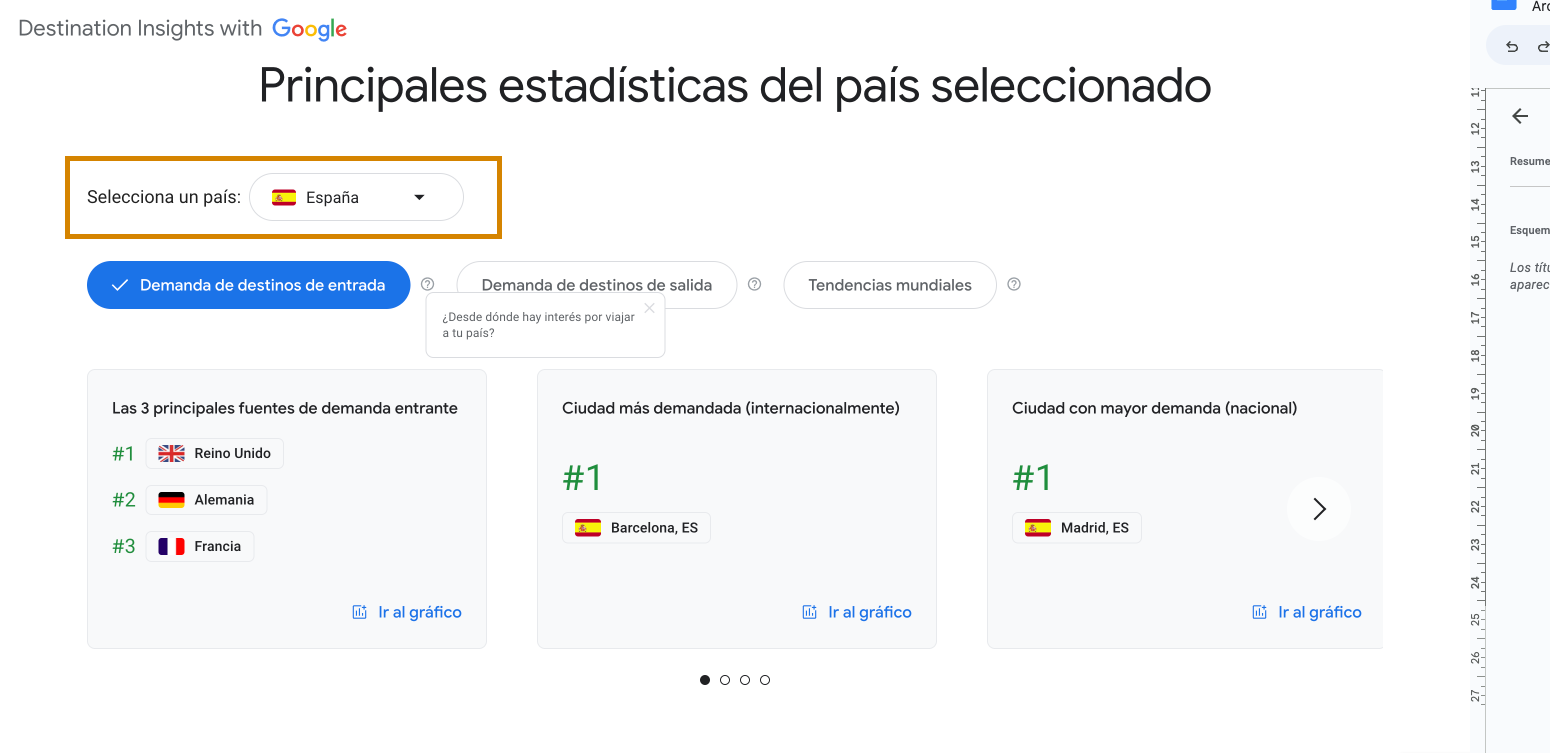
Then, as a DMC, you are interested in information about “Inbound Destination Demand”, which shows you: Where is there interest in traveling to your country?
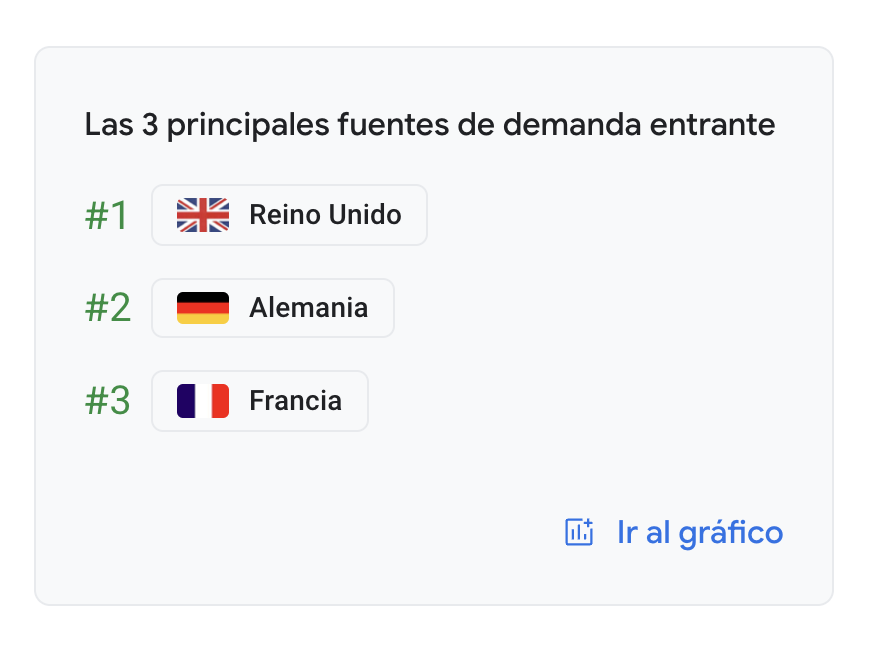
In the case of Spain, for example, the 3 main sources of incoming demand are the United Kingdom, Germany and France.
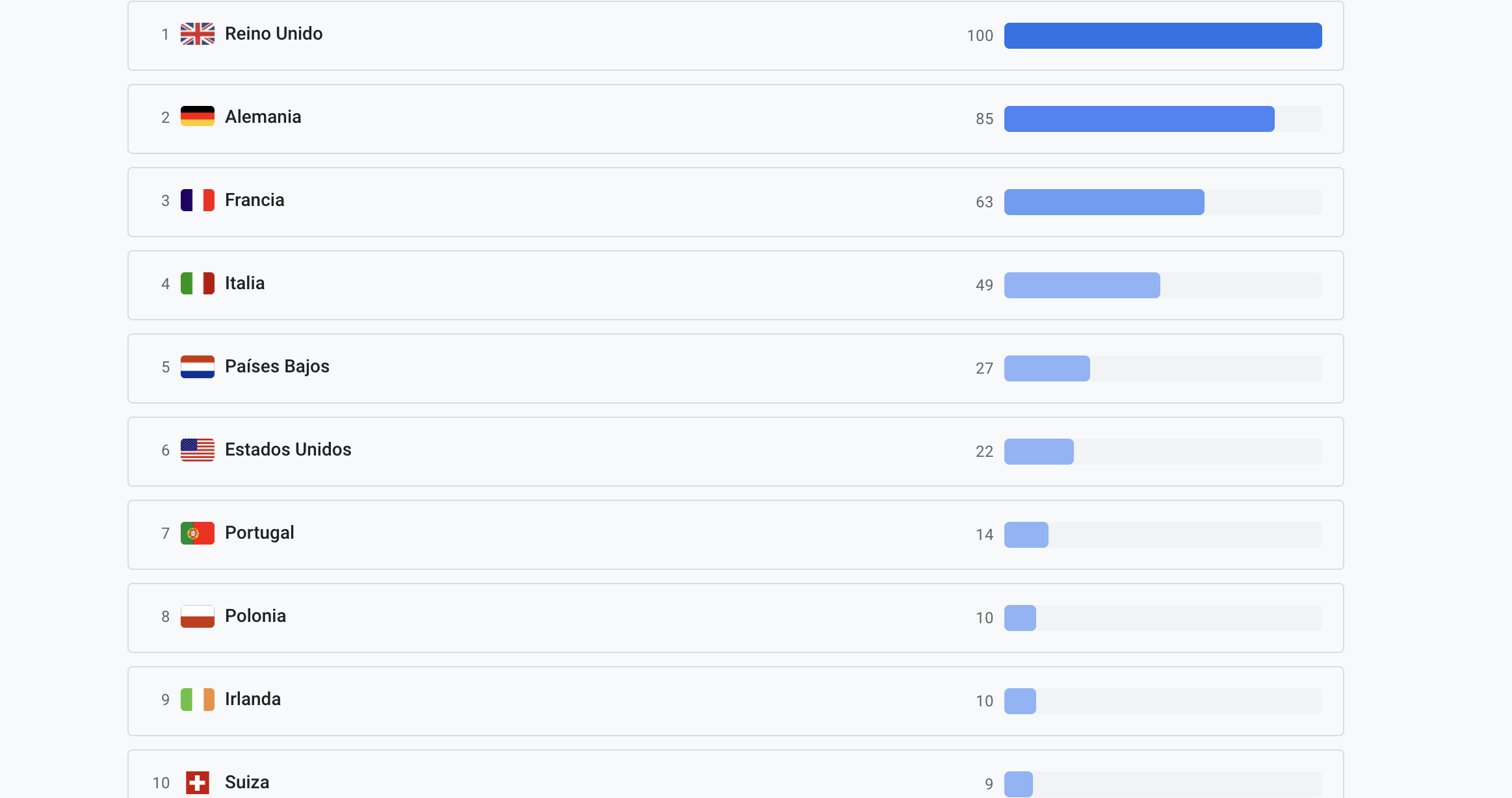
By clicking on the graphic you can have a more detailed view of where the highest demand comes from by country of origin.
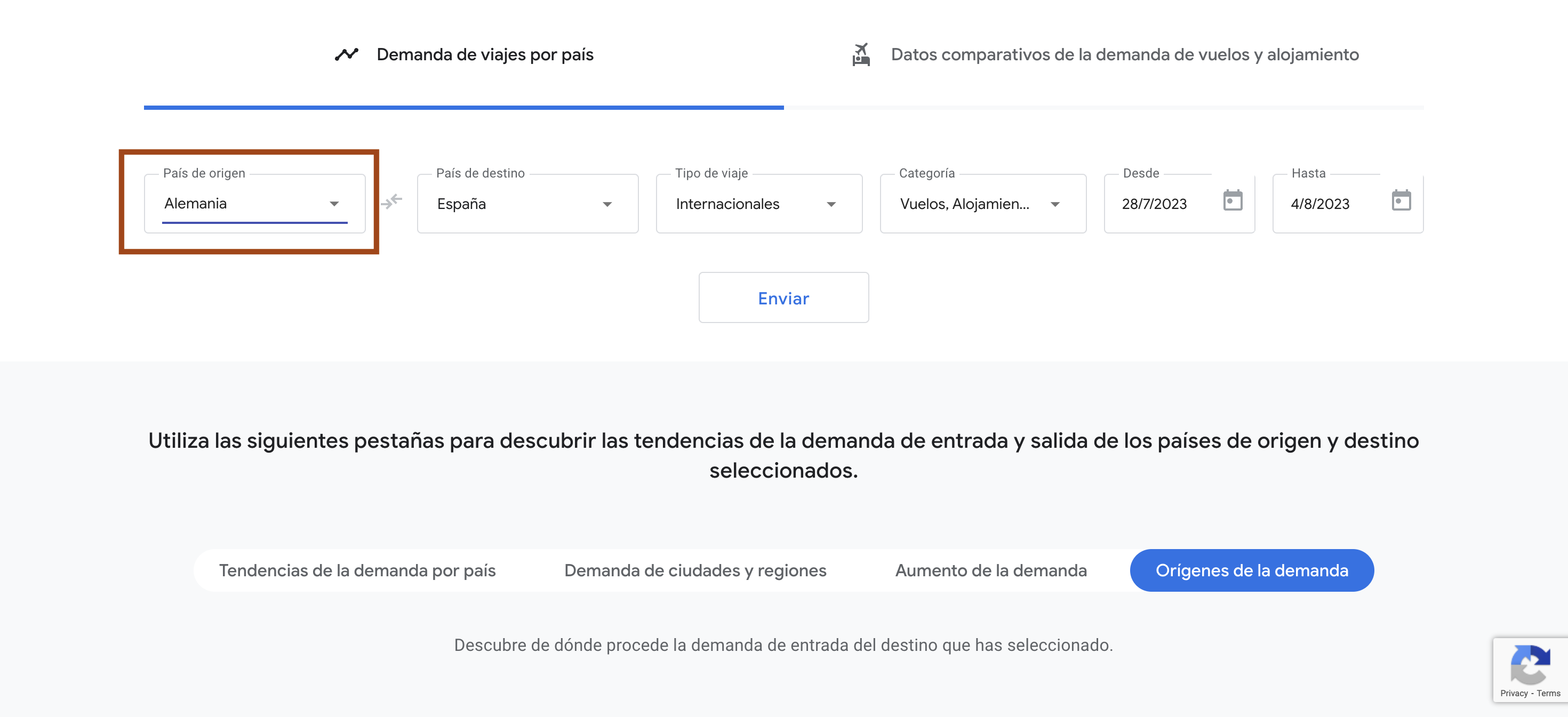
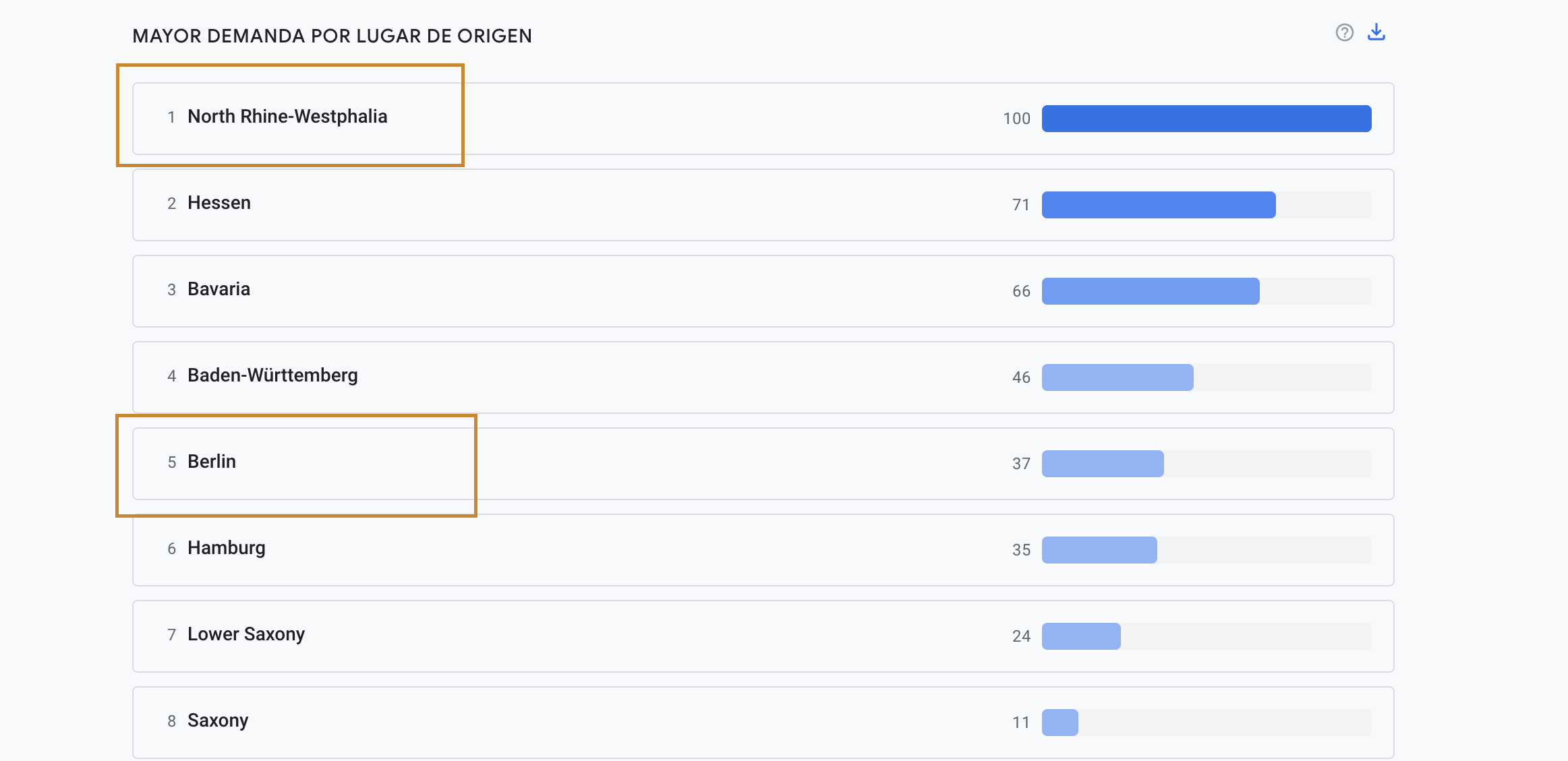
The best thing about the tool are the filters provided by Google. By selecting a specific country, you can understand from which parts of the country there is the greatest demand. For example, from Germany there is more demand for Spain in North Rhine-Westphalia than in Berlin.
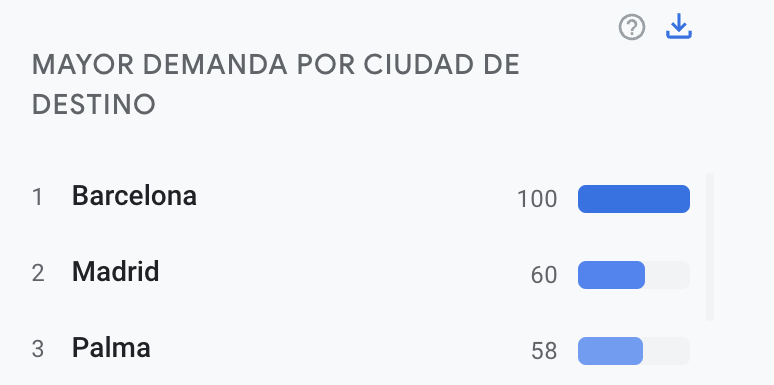
Another essential filter is the “Demand for cities and regions” filter, which shows you the highest demand by destination city. In the case of Spain globally, the 3 cities with the highest demand are Barcelona, Madrid and Palma.
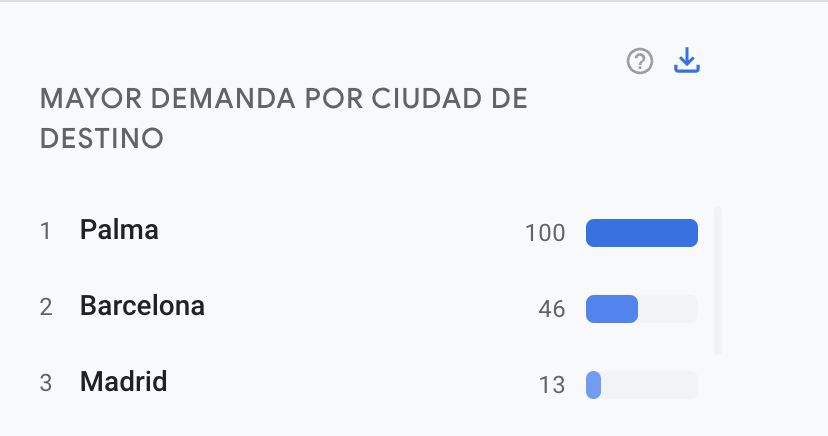
But this can be further filtered if you change the country of origin. Following the same example, for German tourists the greatest demand is for Palma and not Barcelona.
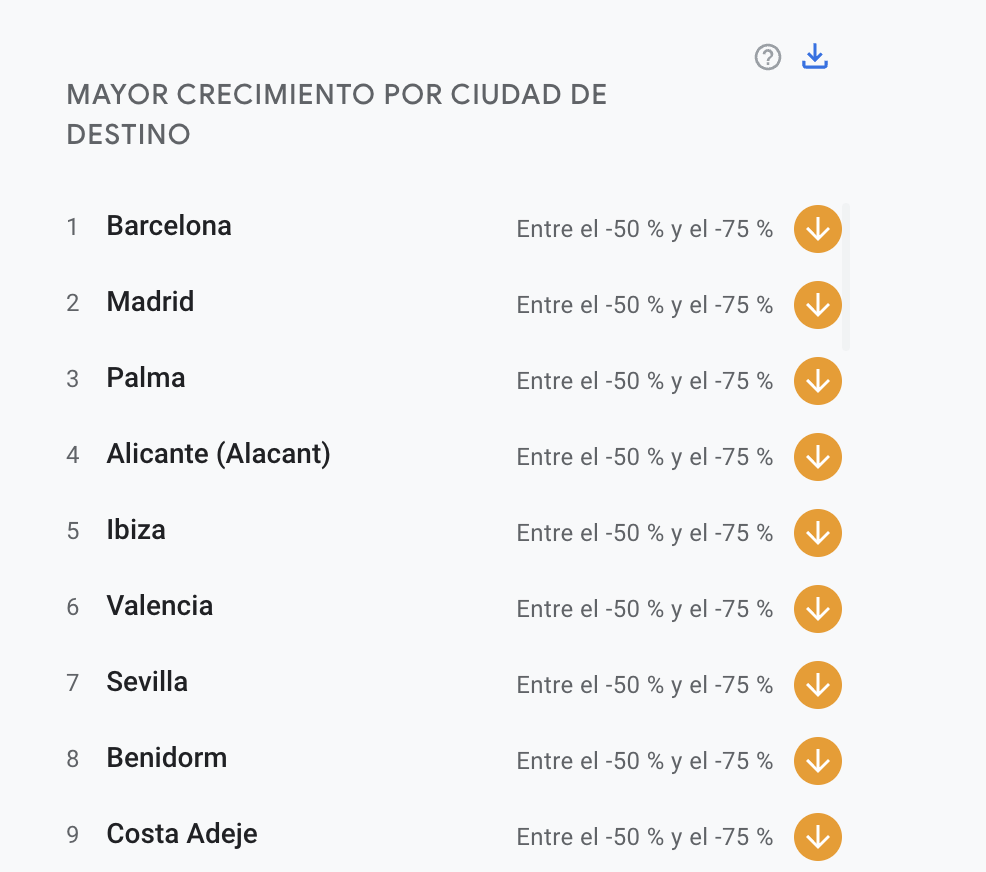
Finally, we recommend that you focus on the “Increased Demand” filter. From there, you can understand how demand has evolved over time in your destination country, the area to which it belongs and its cities.
Here are some tips on how you can take advantage of a tool like this:
- Knowing where the demand comes from, you can search for a network of agencies or associations in that destination. For example, if there is an increase in demand for Spanish destinations in Mexico, you can make yourself known among the ANAV, FraVeo, METRO etc. agency networks and close an agreement between you and them.
- Macro vision vs. Micro vision: It can be a daunting task trying to understand global travel trends, but if you develop a strategy with a micro approach, it can generate better results. For example, focus on understanding the trends in the 5 countries that most demand your destination so you can ensure that you are focusing your time where it really matters.
- Direct your marketing efforts: This valuable data gives you the advantage of knowing precisely where your visitors come from, allowing you to direct your marketing and promotion strategies to the most attractive and popular activities in each destination.